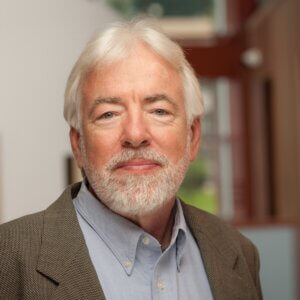
On Saturday, April 5th at 3PM EDT, Barbara Wood will deliver the Third Annual Robert Swann Lecture at Saint James Place in Great Barrington, MA. Barbara will address the two sides of her father’s, E.F. Schumacher’s, work—the economic and the spiritual. These two aspects are highlighted in Schumacher’s books, Small is Beautiful and A Guide for the Perplexed, respectively, and are each integral to the other. According to Barbara, although Schumacher wrote and talked about many different aspects of human activity, these were not separate but all related together to a deeper truth.
Robert Swann and E.F. Schumacher were friends who shared a similar outlook on a new economics, which is why it is so fitting to have Barbara Wood, Schumacher’s daughter and biographer, speak at this year’s Robert Swann Lecture. We hope you will join us in Great Barrington on April 5th. Please RSVP below.
About the Robert Swann Lecture Series:
This series was inaugurated in 2023 in honor of Robert Swann, founder of the E. F. Schumacher Society, now the Schumacher Center for a New Economics. Bob Swann brought the pragmatic skills of a builder to his lifelong commitment to community and decentralized economics as a pathway to peace and ecological harmony. His 1960s civil rights work led to an effort to secure land for African-American farmers, serving as a model for the Community Land Trust movement.
Later on, in the Berkshires, Swann continued his work as a pioneer and advocate of Community Land Trusts as well as local currency initiatives— democratic tools for place-based economic transformation. The Swann Lectures provide a platform to those who embody Bob’s practical activism and who lead by example, advancing community-based economic transformation toward a just and regenerative future.
|
|
|
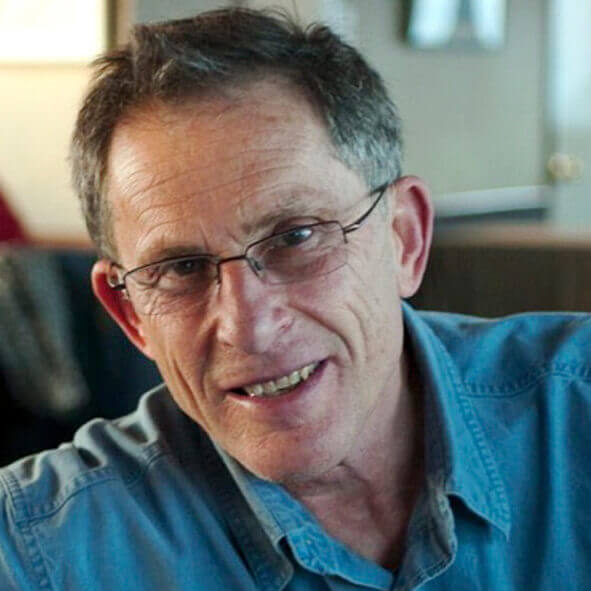
Also as part of the Third Annual Robert Swann Lecture, author and entrepreneur Peter Barnes will recognize economist James K. Boyce as the inaugural recipient of the Common Wealth Prize. James will deliver a lecture titled, “Common Wealth for All: Caring for our planet and for each other.”
About the Lecture:
The gifts of nature may be free, but securing them for the benefit of all is not. It takes hard work to safeguard lands, air, and water from being despoiled. It takes hard work to keep natural resources from being monopolized by a powerful few. Fossil fuels today exemplify these twin dangers. To stabilize the planet’s climate, nations must put a hard ceiling on the burning of coal, oil, and natural gas. The resulting higher fuel prices will generate very large revenues. By recycling this money to the public as carbon dividends, we can consolidate support for protecting the climate by simultaneously protecting the economic security of working people. More generally, common wealth owned equally by all can provide the foundation for universal basic income, helping to forge a more just and democratic economy.
About the Common Wealth Prize
The two giant, tragic flaws of capitalism are that it inexorably destroys nature and widens inequality among humans. More than a century of attempts to fix these flaws through public policy have not succeeded. The purpose of the Common Wealth Prize is to spotlight another way to make markets work for nature, future generations, and all living persons together. That way is to protect and properly manage the multiple assets we inherit together and have a responsibility to pass on, undiminished, to future generations. In other words, it is to protect and share our common wealth at all scales.
E.F. Schumacher was one of the first economists to identify natural and social capital as massive but unrecognized contributors to human well-being. Common wealth is the sum of those two large troves of capital. What unite all these assets are two important qualities: they are gifts from either nature or our ancestors, and they rightfully belong to everyone together, to be held in trust for future generations. Which is hardly the way markets treat them today.
What is to be done about this?’ Schumacher didn’t answer that question fully, but he pointed in the right direction. “The market represents only the surface of society,” he wrote in Small is Beautiful. “Neither buyer nor seller is responsible for anything but himself.” What’s missing, he said, is a set of ‘goods’ that have ‘not been privately appropriated, but are nonetheless essential to all human activity.’
Practically speaking, this means we need new property rights and ownership structures that assure that our common inheritances are priced properly in markets and that their benefits flow to everyone equitably. This may not sound like a big deal, but if it were done at scale it would have massively beneficial effects. Most notably, we’d wind up with science-based limits on human disturbance of nature, along with a steady stream of income for all humans.
Fortunately, there’s a small but growing group of visionaries that is pointing the way along this path. The Common Wealth Prize will recognize these visionaries and promote their ideas in the coming years, starting today. I thank E.F. Schumacher for lighting the torch and the Schumacher Center for carrying it forward.