In May, our celebration of Small is Beautiful‘s 50th anniversary focuses on the theme of “Activating Stagnant Capital to Catalyze Local Transformation.” Our Schumacher Conversation on this topic will take place online next Thursday, May 18th at 2 PM EST. Registration is free.
“Our high capital, low labor philosophy is pauperizing North America with downsizing and rationalizing for ‘efficiency.’ In the long run, this philosophy will be very costly and inefficient because it will destroy our consumer base, self-respect, and other delicate psychological structures of society. It is now also destroying our tax base… just at a time when a damaged society needs more support.”
— Robert Bateman in Small is Beautiful: Economics as if People Mattered: 25 Years Later…with Commentaries

At the age of 26, Chuck Collins inherited a small fortune. A great-grandson of Oscar F. Mayer, founder of the Oscar Mayer meat company, rejected his $500,000 inheritance (roughly $1.4 million today). Instead, he donated it to various foundations for social works. As he explains in a recent interview with El País:
“To me, in my mid 20s, inheriting a lot of wealth at a time of inequality just felt wrong to me. I wanted to make my own way without help from something that happened four generations ago… I just felt like after four generations, the cycle of wealth should kind of come to an end end.”
Chuck’s early conviction has become his vocation. Today, he directs the Inequality Program at the Washington Institute for Policy Studies. His latest book, The Wealth Hoarders: How Billionaires Spend Millions to Hide Trillions, sheds light what he calls the “wealth defense industry.” It describes billionaire tax loopholes, philanthropy as a power-play, and other tricks by which wealth and power are perpetuated in America.
With inequality in the U.S. reaching heights not seen in a century, Chuck’s message is clear: “we should be encouraging the flow of money. Move the money. Move it to the nonprofit charity sector…”
This underlying message is shared among the participants of May’s Schumacher Conversation.
Kate Poole is an anticapitalist investment advisor, co-founder of Chordata Capital alongside her business partner Tiffany Brown. Chordata Capital supports investors in moving money off of Wall Street into community investments that center racial and economic justice.
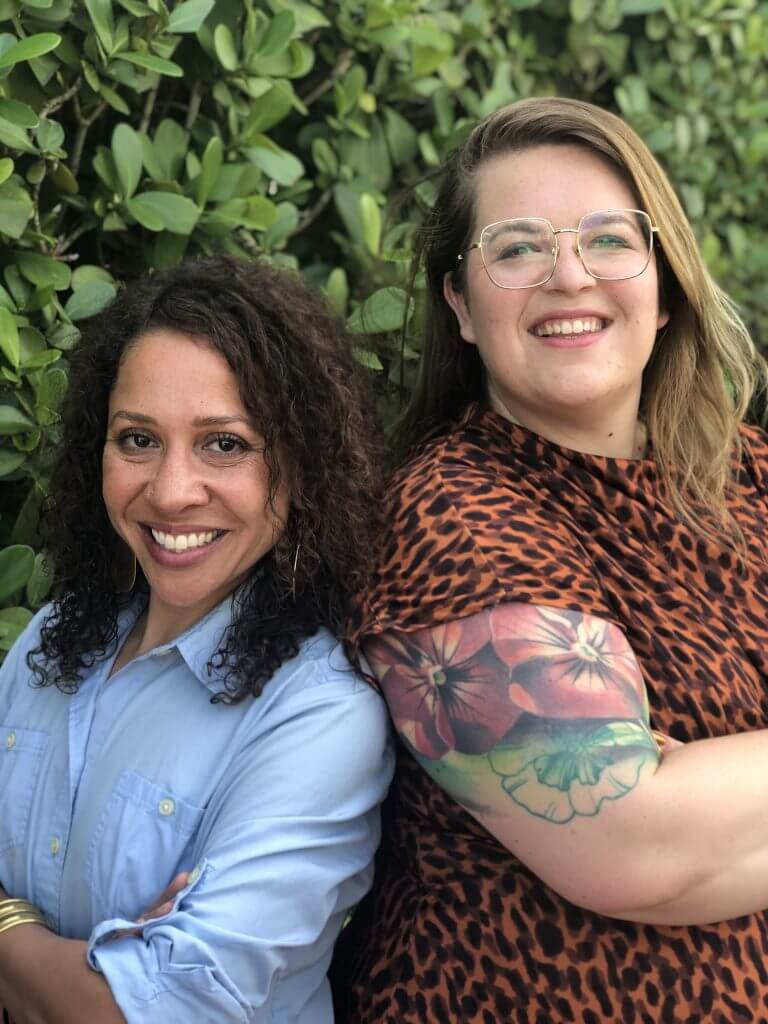
As an anticapitalist wealth management firm, Chordata supports clients in redistributing, rather than continuing to accumulate, wealth. As she describes in an interview with the Road to Repair podcast:
“There’s this opportunity, as more people are taking on this commitment to racial justice or wealth redistribution, [to] try to figure out what we can do to shift people from just posting about it ,or talking about it, to actually taking that action.”
Kate started her work in the new economy field at the Schumacher Center of New Economics, and has worked in the local investing ecosystem for fifteen years. In 2013, she became a leader-member of Resource Generation, an organization that supports young people with significant wealth in redistributing their assets. Kate holds community-building as an essential part of wealth redistribution:
“Part of it is spiritual… having the spiritual and personal practices that you can make a big choice or take a leap outside of what you’ve been told you should do with your money, to make a really different choice. And… another answer… is to be in community around it, so that you’re accountable and have that support and actually following through.“
As C.E.O. and Co-Founder of Rising Tide Capital, Alfa Demmellash oversees a non-profit providing underserved entrepreneurs with the resources they need to launch and grow successful businesses.
Rising Tide is all about rethinking what it means to expect a “return” on investment from these small businesses. According to Alfa, directing capital to underserved entrepreneurs can yield enduring community wealth. Speaking on a panel on Black Entrepreneurship last fall, she expanded on what justice-led community investing looks like :
:
“We don’t just need a handful of successful millionaire-billionaire entrepreneurs. Communities of color are actually enabling communities. We saw this during the pandemic… if you are sitting at home and you needed that food to be brought to you, who’s cooking the food? Who’s driving that truck? Who’s bringing it to your home?
…They’re the essential workers and they’re essential entrepreneurs. They create culture. They create livelihoods. …. [But they] are invisible and are never invested in because that’s not seen as having great [investor] return.’“
Rising Tide aims to support underserved entrepreneurs in a holistic way, providing business management, planning, and support services in addition to connections for small business financing. By directing investment into successful community-based businesses, local entrepreneurs are able to meet their own families’ needs, create additional opportunities for others, and help transform their local communities into vibrant places.
Next Thursday’s Conversation will be hosted by Nwamaka Agbo, who will add her own perspective as C.E.O. of the Kataly Foundation. We look forward to hearing more from each of our panelists on the 18th.