“…[T]he highest purpose of a Community Land Trust has been in educating on the role of land in economics: an understanding that land should not be treated as a commodity, but as ‘a community to which we all belong,’ to quote Aldo Leopold.”
— Susan Witt, quoted in Reweaving the Tapestry of Tenure: Eight Elders of the CLT Movement Who Championed Community Ownership of Land
This past year, we’ve witnessed the continued strides of the Community Land Trust movement with great joy. There are now 275 CLTs counted in our Community Land Trusts Directory in the United States alone, with a new entry nearly every month.
There are good reasons for this steady expansion. These place-based, democratic organizations present a proven tool to address some of communities’ most urgent social and economic needs. From housing, to local agriculture, to the renewal of neighborhood commercial and cultural corridors, CLTs empower residents to take on long-standing inequities tied to land access in creative, sustainable ways.
Here are just a few highlights from the past year that show how CLTs are rising to the occasion of our social and ecological challenges:
- Philanthropist MacKenzie Scott’s Historic Contributions to CLTs Nationally. With over $65M granted to various CLTs this year, plus a landmark $12M donation to Grounded Solutions Network, one of the nation’s wealthiest individuals is drawing attention to the urgent need for secure, affordable housing in America’s cities— and affirming the CLT solution.
- California’s New $22M “Community Ownership for Community Power Fund.” This initiative, announced in May, brings community power-building organizations together with the funder ecosystem to address inequitable funding for community ownership of land, and housing in the state. Through grantmaking, capacity building, research, and other activities, it will “position community ownership as a more widely accessible strategy in California.”
- Minnesota’s Unprecedented $1.3 Billion+ Public Investment in Affordable Housing. This one-time state budget, supported by the Minnesota CLT Coalition and its allies, funds programs for workforce homeownership, down payment assistance, and other measures. The Coalition estimates “conservatively 4-5 times the amount of available state funding (compared to previous years) for the production of affordable homeownership over the next three years.” Member CLTs are well positioned to implement these programs.
- Momentum Builds for a Landmark NYC Community Land Act. This legislative package, championed by the NYC Community Land Initiative, would shift the power balance in local development to empower community self-determination. New Economy Project (an Initiative member) reports having “secured majority support in the City Council for legislation that will help community land trusts bring land and housing into community control” and are “organizing to win passage in 2024.”
- Agrarian Trust selected as Provisional Recipient of USDA Increasing Land Access Program. This program provides about $300 million in funding to improve access to land, capital, and markets for underserved farmers, ranchers, and landowners. Their selection will strengthen the capacity of this innovative non-profit to support new and existing Agrarian Commons.
- Farmsteads for Farmers is affirmed by Southern Berkshire voters. In our home region in Western MA, the Berkshire CLT’s campaign to secure local farmland and housing was granted $300,000 by Great Barrington town voters.
Echoing calls around the country and the world, we encourage gifts of land and money in order to expand community land trusteeship, now and for the future.
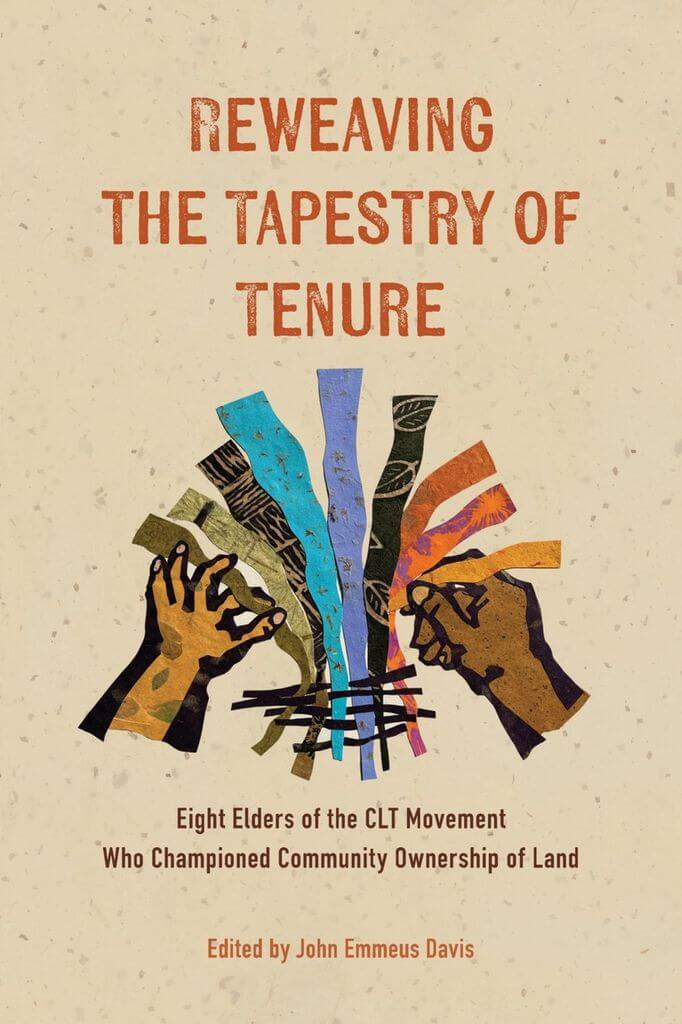
A new book, out this month from the Center for CLT Innovation’s Terra Nostra Press, reflects on the past, present, and future of the CLT movement. Reweaving the Tapestry of Tenurepresents interviews with eight elders of the CLT Movement, including Schumacher Center Executive Director, Susan Witt. This new interview is available on our website (courtesy of Terra Nostra Press).
In it, Susan reflects on the profound vision for the movement instilled by CLT pioneer Robert Swann, and the seeds of transformation being sown today. Recognizing that any shift in American land tenure will be measured in decades, stretching beyond any one lifetime, interviewer Lisa Byers of OPAL CTL asks “What keeps you going?”
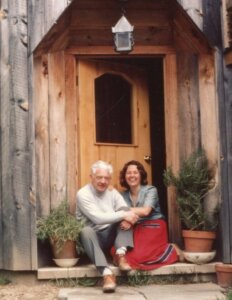
Here is Susan’s response:
I think of Wes Jackson at the Land Institute, who has not a five-year plan or a seven-year plan, but a hundred-year plan to grow a perennial grain. He is breeding a perennial grain so that the prairies no longer need to be tilled, so there’s a rich enough content in the grain to feed eight billion which is the task before us. There was no doubt… that’s a long-term goal.
So, it’s this picture of a new economics that is moving me. I have just such confidence in the approach Bob brought forward… to decommodify land, to democratize money issue, and to build thriving place-based economies. There is such an urgency to it…
I have confidence in the direction we’ve set… I’m not discouraged by the length of time. I see the vitality of the concepts… how they light up the young people who come to work with us… This is work that can transform the whole economic system to one that is more just… more ecologically responsible. A vision that gives hope in a time of crisis.