Recently at the Schumacher Center we have found ourselves engaged in conversations asking some variation of the question: What is the best way to work to achieve an equitable and environmentally sustainable economy given the present political and cultural climate?
A popular approach has been to work to change consumption patterns—and certainly this is important to achieve household by household, institution by institution. The argument for this approach is that humans are using up the earth’s resources at an alarming rate leading to environmental degradation. The solution is therefore to purchase goods that contain a greater amount of recycled material and less toxins. However the net result of this single issue approach may only be to shift procurement patterns from one international corporation to another which, for the time being, has tweaked its production methods to meet market demand. A plus, yes; but not a transformation.
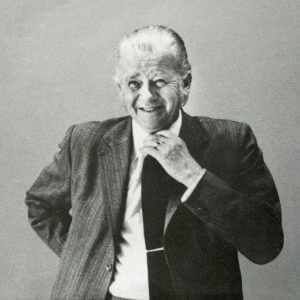
E. F. Schumacher added the element of scale in defining what he meant by an economy of permanence. He argued that items consumed in a region are best produced in the region. Is the product made locally? Do we know its story? Have we walked the fields and woods which were the source of its natural materials? Do we know the farmer who grew the vegetables, the potter who crafted the plate, the cabinetmaker who built the table? These storied items have the power to evoke the images of a particular craftsperson, a unique place, and a complex community of exchanges. And through the inner activity of imaging an alchemy occurs, the economic process is transformed. The goods themselves educate us to care for those who made them and the earth who gave of her resources to form them.
There is a wonderful additional result of using these locally made products: because of the embedded stories, the items engage our capacities as human beings more fully. Not just stuff to dispose of later, they come entwined with our own thoughts and history and so are cherished. We need less to feel rich.
 Judy Wicks, the owner of Philadelphia’s White Dog Café, raised the same concerns when she initiated the Business Alliance for Local Living Economies as a project of the Social Venture Network. She hoped to redefine what was a “green business” or “social investment” by including the standard of local.
At the Schumacher Center we are committed to modeling local economic institutions that positively favor small local businesses and local production. The Berkshires, like most of the nation’s economy, is primarily a service economy. How do we foster greater “import-replacement,” to use Jane Jacobs’ term, in order to move towards being a productive regional economy? Our approach has been to find ways for consumers to share risk with producers in building new capacity. We do not count on government to make changes, rather on the cultivation of a citizen-based entrepreneurship.
 It is easiest around food. The concept of a local food production capacity is evident to many. The community supported agriculture movement in which consumers guarantee the yearly production costs of a farmer, began at Robyn Van En’s Indian Line Farm neighboring us on Jug End Road. Indian Line Farm was also the model farm for the partnership the Schumacher Center arranged between a community land trust and a conservation land trust so that consumers could purchase the land value when the farm came up for sale, lease the land back to farmers Alex Thorp and Elizabeth Keen, and keep the good soil in active vegetable production. The farmers could afford the mortgage on home and buildings from farm income, but could not afford the high cost of land. Consumers knew that and took responsibility to finance the land through a one time gift. It is a model being replicated elsewhere.
 The late Bob Swann pioneered the community land trust model concurrent with his friend Fritz Schumacher’s articulation of the theory of small scale economies. The community land trust initiative gives a way for a region to determine future uses of land without the clumsiness of zoning or the inequities of the market, thereby providing affordable access to land for local housing, farming, and other desired businesses. Bob was also a champion of local currencies which are a way for consumers to commit to purchase from local sources. Local currencies can also be one of the most elegant tools for consumers to provide micro-credit to regional producers.
While Schumacher Center staff are at work on actual model programs in the Berkshires, we are also sharply aware of the importance of continuing a national dialogue on these subjects. The greatest hindrance to developing a new economy based on ecological and social objectives is apathy. It is easy to turn to the myriad of products offered by global corporations whose questionable production methods are obscured by the distances the goods have traveled. Building sustainable local economies is hard work, involving long term commitment to people, land, and community.
A citizenry actively engaged in building its own local economy will not stand passively by as its government meddles in the economies, landscapes, and communities of other peoples. It is a citizenry that experiences self-determination, the creativity of solving problems at the local level, the freedom of producing goods needed from local resources, a collective knowledge of its own complex ecosystem, and the importance of responding to that complexity in a complex way.
The times we live in are troubling. There is much work ahead for people of good will. We welcome your support of the Schumacher Center. We celebrate your initiatives to build your own local economy.