“In public talks and private discussions, E. F. Schumacher often pondered ‘the land question.’ An economic system that treats land as a commodity to be bought and sold on the market fails to foster the respect for land necessary to encourage its proper use. When an individual is allowed private ownership of a limited natural resource, that individual has an unfair economic advantage. The scarcity of arable land and a growing demand for its use result in an increase in the value of land through no effort on the part of the landowner. This potential for speculative gain places tremendous pressure on the landowner to maximize the dollar value of the land through excessive development and erodes the landowner’s commitment to community and place. A further result of the ability to make land a commodity is that a community’s capital is tied up in the land. Credit for the small-business owner tightens. The region loses its diversity of enterprises, which is the basis of a more sustainable economy and a more environmentally responsible business sector.”
— Robert Swann in Small is Beautiful: Economics as if People Mattered: 25 Years Later…with Commentaries
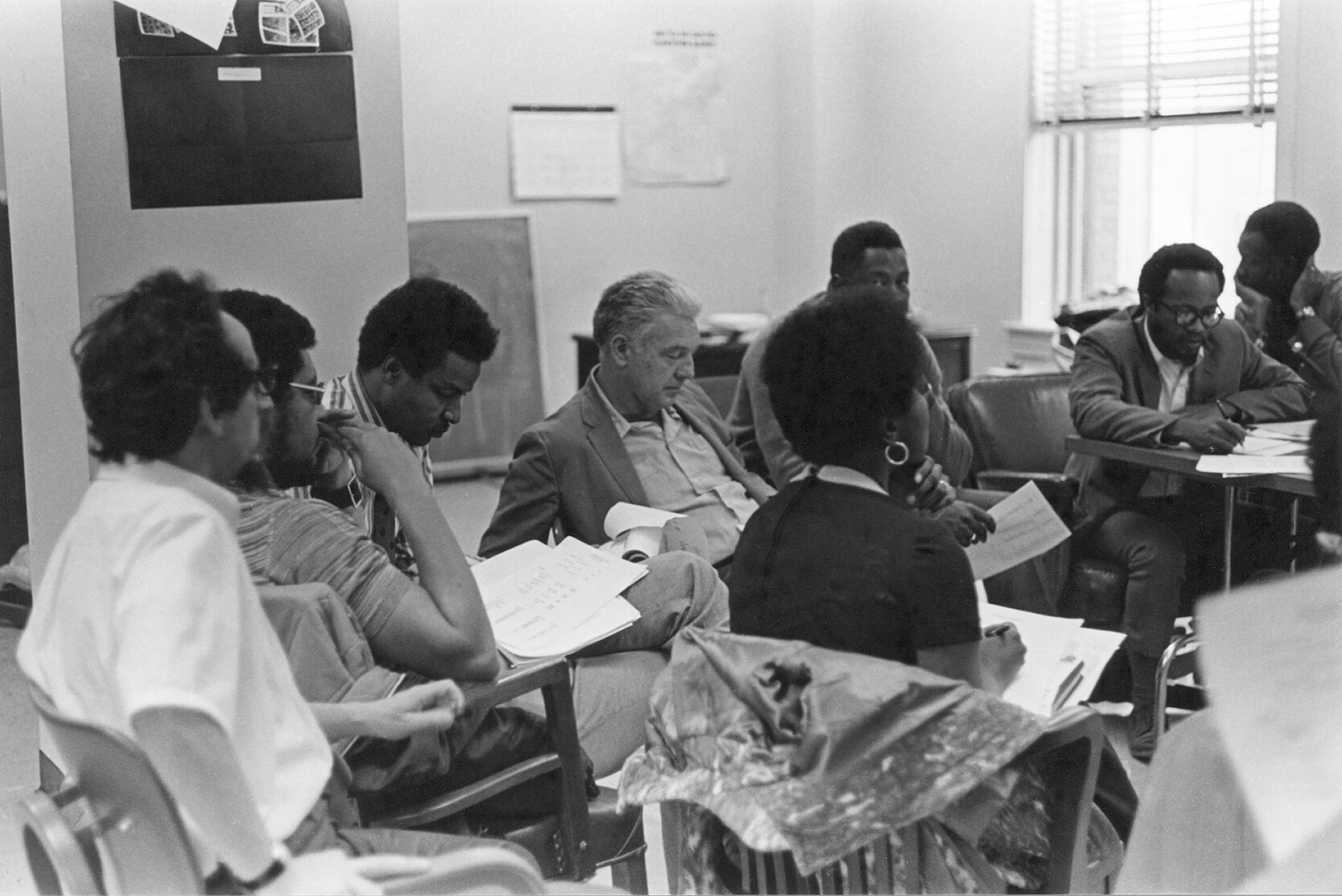
In 1967 Robert Swann, co-founder of the Schumacher Center for a New Economics, founded the first community land trust with civil rights activist, Slater King, in Albany, GA. New Communities was a five-thousand-acre farm with planned housing, farming, and value-added enterprises designed to provide stable access to land for African American families excluded by racist policies from owning land. The land would be held in a nonprofit, democratically structured, place-based corporation, and then leased to individual families and an agricultural cooperative on long term leases that provided lessees with ownership of buildings and other improvements.
The Schumacher Center, organized in 1980, continued Bob Swann’s work of advocating for community land trusts as a way to hold land in a Commons and broaden access through affordable long-term leases with private ownership of the buildings on the land. Our work has been both theoretical and applied. Our website captures the history and philosophical roots of the movement and our online community land trust directory shares details of the over 350 community land trusts around the country and the growing number around the world.
Schumacher staff helped found and provided organizational support to our local Berkshire Community Land Trust and its sister title holding corporation the Community Land Trust in the Southern Berkshires. The Schumacher Center’s Library/Office building is on CLTSB land.
But we have come to recognize that there is not sufficient funding in philanthropy and government combined to purchase enough land to address the significant land access problem throughout the country. And indeed, throughout the world. More is needed to create a fair distribution of land to meet rising social and ecological problems and to address ever widening wealth disparities.
We have therefore undertaken to mount a public campaign for land gifting.
Part of the campaign is to convene lawyers and estate planners and share material that details how to donate land with buildings so that gifting working lands to community land trusts becomes as well understood as donating ecologically sensitive lands to conservation land trusts.
To that end, with support from the Kalliopeia Foundation, the Schumacher Center has partnered with a team of lawyers to offer two webinars through the American Bar Association’s Forum on Affordable Housing and Community Development Law. The webinars count as continuing education credit to practicing attorneys. But they are also open to the general public seeking better understanding of community land trust legal structure and ways to donate land and buildings.
Panel One: Introduction to Community Land Trust Legal Model
Tuesday, February 24, 2026, 12:00 – 1:30 PM Eastern
Panel Two: Legal Tools for Gifting Land to CLTs
Tuesday, March 3, 2026, 12:00 – 1:30 PM Eastern
From the webinar description:
This two-part webinar series provides attorneys with comprehensive training on the legal frameworks, tools, and strategies for facilitating land donations to Community Land Trusts (CLTs). As land acquisition challenges intensify for affordable housing development, CLTs offer a proven model for preserving affordability in perpetuity through community land stewardship. However, the potential of land donations to CLTs remains largely untapped due to limited attorney awareness and expertise in this emerging practice area. This series bridges that gap by equipping affordable housing and community development lawyers with both foundational knowledge of CLT legal structures and practical skills for executing land donation transactions. Participants will gain understanding of the philosophical and legal frameworks underlying CLTs, explore diverse applications across housing, agriculture, and commercial development, and master the technical documentation required for tax-advantaged land transfers. Through examination of successful national models and analysis of sample legal documents, attorneys will be prepared to advise clients on incorporating CLT donations into estate plans and succession strategies.
This comprehensive training serves both attorneys seeking to expand their practice into this specialized area and legal professionals supporting nonprofit CLT organizations in building land donation programs. Attendees will receive sample legal documents as part of the course materials.
Panel One: Despite the growing prevalence of Community Land Trusts (CLTs) as an affordable housing tool, two critical barriers remain: access to land and access to knowledgeable legal counsel. Limited funding in philanthropy and government for land acquisition has increased the urgency of land donations to CLTs as part of a broader approach toward equitable and ecologically sound land stewardship, one that preserves subsidy in perpetuity. This panel will introduce the CLT model and build awareness of CLTs and their transformative potential amongst attorneys – in particular, attorneys specializing in estate law, real estate, property and community development law. The panel will provide foundational knowledge of how CLTs function and their role in succession planning and philanthropy.
Panel Two: This webinar is aimed at streamlining and popularizing the practice of donating land to Community Land Trusts (CLTs). The goal is to make donating land to CLTs familiar to estate planners, lawyers, community foundations, and private individuals as donating land to a conservation land trust. This information is equally aimed at CLTs interested in building capacity to seek out and receive land donations. The panel will provide practical guidance on the legal tools, documentation, and processes involved in facilitating land donations to CLTs.
Please share with those you think will benefit from these trainings.
Warm Wishes,
Staff of the Schumacher Center