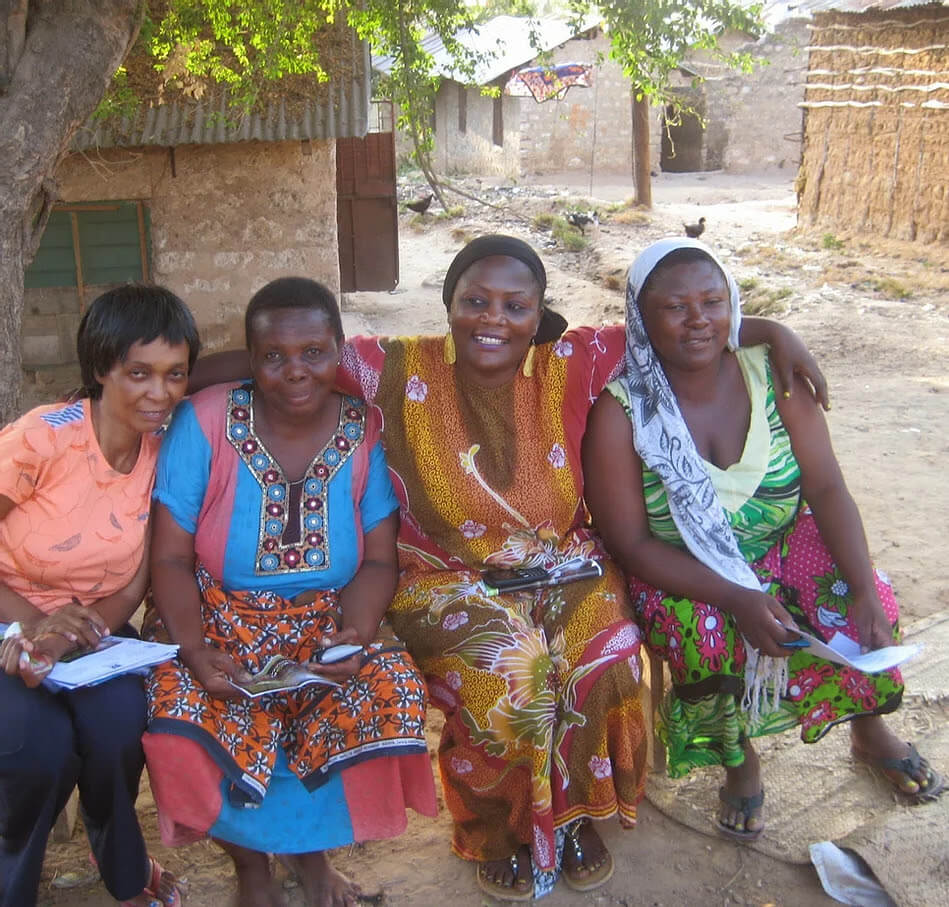
 a non-profit based in Kenya, seeks to empower marginalized
communities to take charge of their own livelihoods and economic future since 2010.
We continue our chapter-by-
Having raised the insufficiency of “high tech” solutionism for the world’s poor and rural villages, and describing the promise of intermediate technology, in Chapter 13 Schumacher highlights a fundamental error in the prevailing Western conception of economics. As our guide David Boyle points out, the development truly desired “is something much wider and deeper than economics, certaintly than econometrics.”
In Schumacher’s own words: “Its roots lie outside the economic sphere, in education, organization… and a national consciousness of self-reliance.” The discussion of appropriate scale in economic development is, in this way, threaded back into the realm of culture and shared beliefs.
Excerpt from the Guide to Chapter 13
This chapter was originally published in 1970
The Fabian Society is a well-known progressive thinktank, founded in the 1890s by the husband and wife team of Sidney and Beatrice Webb.
What the Chapter Says…
Schumacher begins the chapter by distinguishing between development for people and development of goods, which “do not raise so many questions.” This is particularly the case when econometricians and statisticians are involved:
“Goods even cease to be anything identifiable, and become GNP, imports, exports, savings, investment, infrastructure, or what not. Impressive models can be built out of these abstractions, and it is a rarity for them to leave any room for actual people. Of course, ‘populations’ may figure in them, but as nothing more than a mere quantity… a divisor after the dividend…”
People on the other hand have feelings, and pride, so that we have to leap three gulfs – between village people and city people, between the rich and the poor and between educated and uneducated:
“The first problem of development aid is how to bridge these three gulfs. A great effort of imagination, study, and compassion is needed to do so. The methods of production, the patterns of consumption, the systems of ideas and of values that suit relatively affluent and educated city people are unlikely to suit poor, semi-illiterate peasants. Poor peasants cannot suddenly acquire the outlook and habits of sophisticated city people. If the people cannot adapt themselves to the methods, then the methods must be adapted to the people. This is the whole crux of the matter…
“If the nature of change is such that nothing is left for the fathers to teach their sons, or for the sons to accept from their fathers, family life collapses. The life, work, and happiness of all societies depend on certain ‘psychological structures’ which are infinitely precious and highly vulnerable. Social cohesion, co-operation, mutual respect and above all self-respect, courage in the face of adversity, and the ability to bear hardship – all this and much else disintegrates and disappears when these ‘psychological structures’ are gravely damaged…
“No amount of economic growth can compensate for such losses – though this may be an idle reflection, since economic growth is normally inhibited by them.”
He then gives an example of the manager of an African textile mill he met, who showed him around, boasting that his factory was at the highest technological level anywhere in the world. Why?
“Because.’ he said, ‘African labour, unused to industrial work, would make mistakes, whereas automated machinery does not make mistakes. The quality standards demanded today are such that my product must be perfect to be able to find a market. Surely, my task is to eliminate the human factor.’”
Worse, the equipment had to be imported – which meant that all higher management and maintenance personnel had to be imported too. Even the raw materials had to be imported because the locally grown cotton was too short for top quality yarn, and the standards demanded the use of a high percentage of man-made fibres. “This is not an untypical case,” he says.
It isn’t really about money, in any case, says Schumacher: this is a key tenet in the new economics back to John Ruskin.
“The oil producing countries of the Middle East, Libya, and Venezuela… [t]heir tax and royalty income from the oil companies in 1968 reached £2,349 million, or roughly £50 per head of their populations. Is this input of funds producing healthy and stable societies, contented populations, the progressive elimination of rural poverty, a flourishing agriculture, and widespread industrialization? In spite of some very limited successes, the answer is certainly no. Money alone does not do the trick. The quantitative aspect is quite secondary to the qualitative aspect. If the policy is wrong, money will not make it right; and if the policy is right, money may not, in fact, present an unduly difficult problem.”
It is all about quality not quantity, he says:
“They know how to do a few big things in big towns; but do they know how to do thousands of small things in rural areas? They know how to do things with lots of capital: but do they know how to do them with lots of labour — initially untrained labour at that? On the whole, they do not know; but there are many experienced people who do know, each of them in their own limited field of experience. In other words, the necessary knowledge, by and large, exists; but it does not exist in an organized, readily accessible form. It is scattered, unsystematic, unorganized and no doubt also incomplete.”
You know the old story about giving someone a fish to feed them for a day, or teaching them to fish and, by doing so, feeding them for the rest of their life? It’s the same principle here.
The UK was then providing about £250 million a year in aid, which seems like a tiny amount compared to these days. Schumacher suggests diverting one per cent of that to organizing and mobilizing those ‘gifts of knowledge’. “It might also make the other ninety-nine per cent immensely more fruitful,” he says.
But how to do it?
“It is quite wrong to assume that poor people are generally unwilling to change; but the proposed change must stand in some organic relationship to what they are doing already, and they are rightly suspicious of, and resistant to, radical changes proposed by town-based and office-bound innovators who approach them in the spirit of: ‘You just get out of my way and I shall show you how useless you are and how splendidly the job can be done with a lot of foreign money and outlandish equipment’.”
We no longer have the knowledge we need, but they have it, he says. He suggests a series of teams, made up of administrators, business people and communicators, working together, rather than separately, at every level in both donor and recipient countries.
But then he has a flash of inspiration and hope:
“If the rural people of the developing countries are helped to help themselves, I have no doubt that a genuine development will ensue, without vast shanty towns and misery belts around every big city and without the cruel frustrations of bloody revolution. The task is formidable indeed, but the resources that are waiting to be mobilized are also formidable.”
Economic development is something much wider and deeper than economics, certainly than econometrics, says Schumacher. “Its roots lie outside the economic sphere, in education, organization, discipline and, beyond that, in political independence and a national consciousness of self-reliance.”
It can only work if…
“… it is carried forward as a broad, popular ‘movement of reconstruction’ with primary emphasis on the full utilization of the drive, enthusiasm, intelligence, and labour power of everyone. Success cannot be obtained by some form of magic produced by scientists, technicians, or economic planners. It can come only through a process of growth involving the education, organization, and discipline of the whole population. Anything less than this must end in failure.”
In the second part of this chapter guide, David Boyle gives a sweeping summary of global development trends since the 1970s— weighing where Schumacherian values have been advanced, and multiple instances where global institutions continue to fall short.
To explore more deeply the themes put forward in Small Is Beautiful, visit our new Decentralism File: featuring 120+ heuristic selections of decentralist thought spanning 2,500 years.