As the 50th anniversary of Small is Beautiful, 2023 is our opportunity to advance solutions to today’s social, economic, and environmental challenges that build on Schumacher’s original vision.
To do so, the Schumacher Center is convening a monthly series featuring New Economic thinkers, builders and activists from a range of fields. “Schumacher Conversations: Envisioning the Next 50 Years” brings together change-makers whose work today is actively shaping a ‘small is beautiful’ future, organized around 12 key themes and fields of activism.
The theme for June is Creating a Global Renewable Energy Commons. This online Conversation took place Thursday, June 15th at 2PM (EST).
Featuring:
– Stuart Cowan, Buckminster Fuller Institute
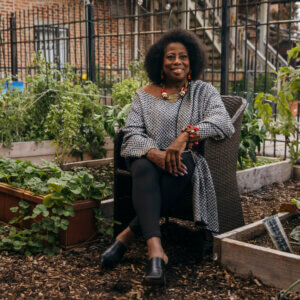
– Naomi Davis, Blacks In Green and Friends of Wind
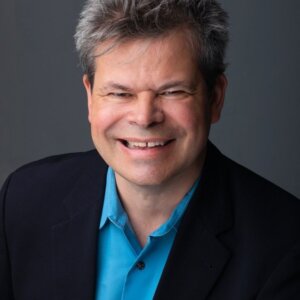
– David Sturmes Verbeek, Fair Cobalt Alliance
– Moderated by Greg Watson, Schumacher Center for New Economics
“What matters, as I said, is the direction of research, that the direction should be towards non-violence rather than violence; towards an harmonious cooperation with nature rather than a warfare against nature; towards the noiseless, low-energy, elegant and economical solutions normally applied in nature rather than the noisy, high-energy, brutal, wasteful, and clumsy solutions of our present-day” — E.F. Schumacher, Small is Beautiful
Small is Beautiful advocated a reorientation of economic means toward the proper ends of health and flourishing for humans as well as ecology. Today, with the climate and biodiversity crises reaching new levels of urgency, the need to transition out of an unsustainable energy system is clearer than ever. Yet simple, top-down approaches to a green energy transition have serious risks: of perpetuating old harms, leaving current energy communities and workforces behind, transferring zones of extraction from fossil fuels to critical earth minerals, and further ratcheting existing geopolitical tensions.
Beyond the zero-sum paradigm pitting decarbonization and prosperity against one another, creative approaches emerge for a transition away from fossil fuels which affirm fairness and promise to unlock human potential. June’s panelists are those uncovering such novel solutions to renewable energy in our tumultuous present. Unifying “thinking globally” and “acting locally,” these diverse approaches affirm community interdependence, global cooperation and right livelihood. Together, they point toward a phase-shift from humanity’s market-competitive approach to energy generation toward a global commons approach rooted in biospheric stewardship and mutual interdependence.
Each panelist was invited to reflect on themes in Small Is Beautiful that connect with their own thinking and activism. These reflections then opened up a broader conversation on the topics of renewable energy and a global energy commons. An audience Q&A follows moderated by our host, Greg Watson, Schumacher Center Director of Policy and Systems Design.
For added background, read Greg’s recent essay, The World Grid and New Geographies of Cooperation, and revisit our Co-Founder Robert Swann’s foundational 1977 essay, “World Resources Trusteeship.”