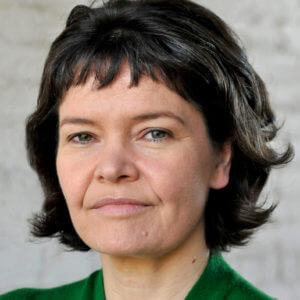
It’s really my great pleasure to introduce the 42nd Schumacher Lecture by Kate Raworth. I’m talking to you today from just outside Amsterdam, the Netherlands. Kate Raworth is a renegade Economist. She focuses on making economics fit for the 21st century realities.
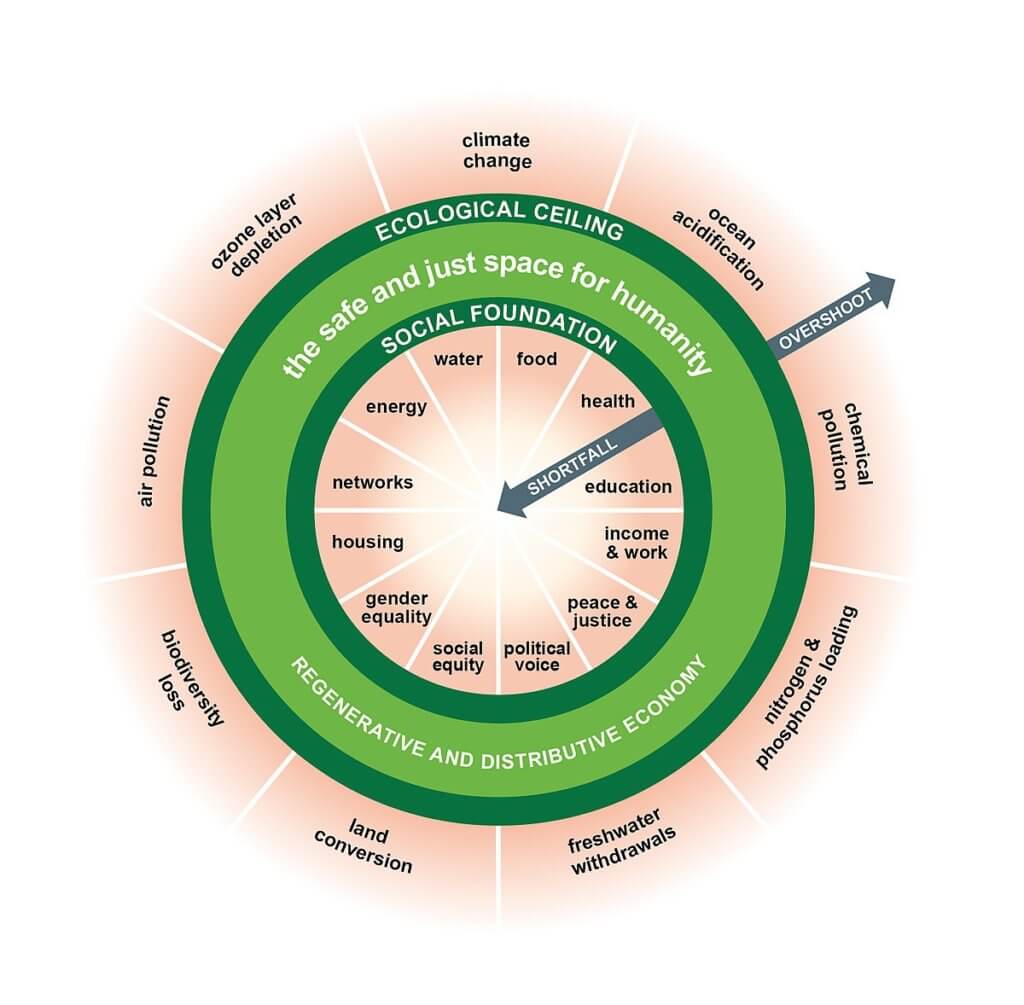
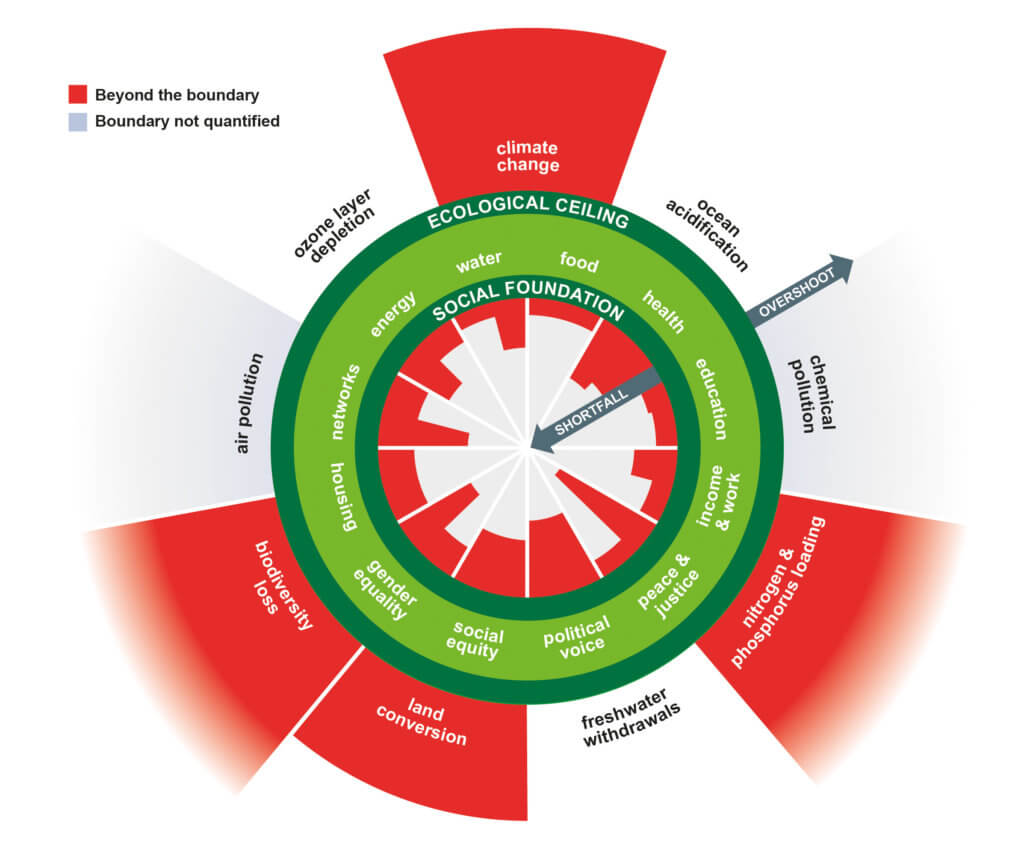
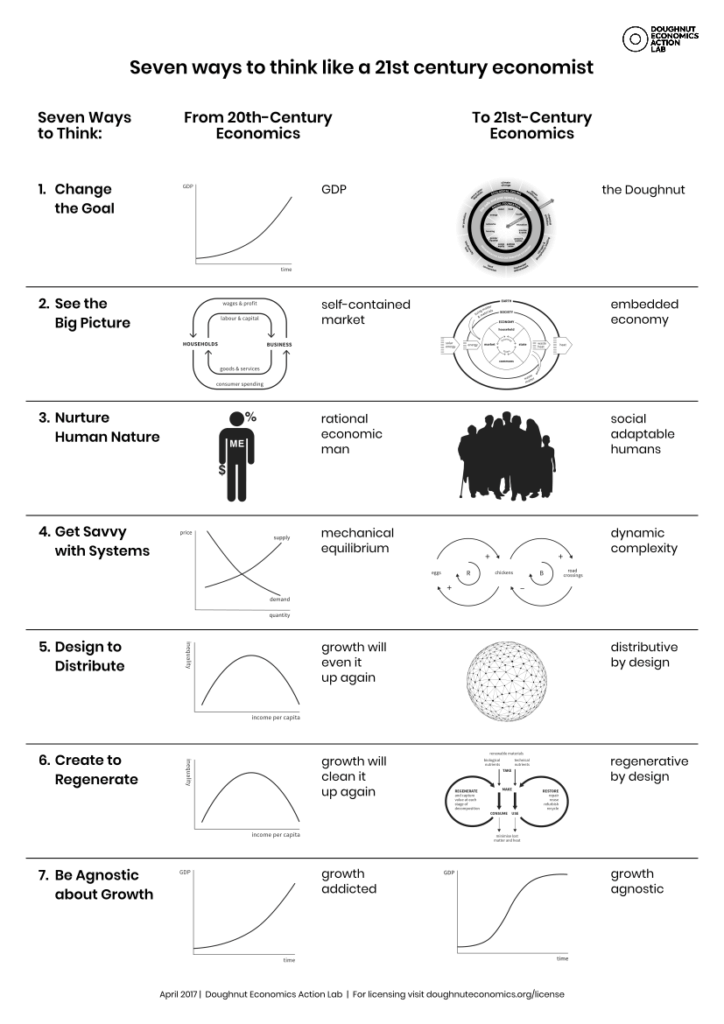
She is the creator of the Doughnut of Social and Planetary Boundaries and Co-Founder of the Doughnut Economic Action Lab. Her internationally best-selling book Doughnut Economics: Seven Ways to Think Like a 21st Century Economist has been translated into over 20 languages and has been widely influential with diverse audiences from U.N General Assembly to Extinction Rebellion. Kate is Senior Associate at Oxford University’s Environmental Change Institute where she teaches on the Masters in Environmental Change and Management. She’s also professor of practice in my hometown at the Amsterdam University of Applied Sciences. Over the past 25 years Kate’s career has taken her from working with micro-entrepreneurs in the villages of Zanzibar to co-authoring the Human Development Report for UNDP in New York, followed by a decade as Senior Researcher at Oxfam. She holds a first-class BA in Politics, Philosophy and Economics and a MSc in Economics for Development, both from Oxford University. She has been awarded honorary doctorates by the University of York, KU Leuven, and Business School Lausanne. She is also a member of the Club of Rome.
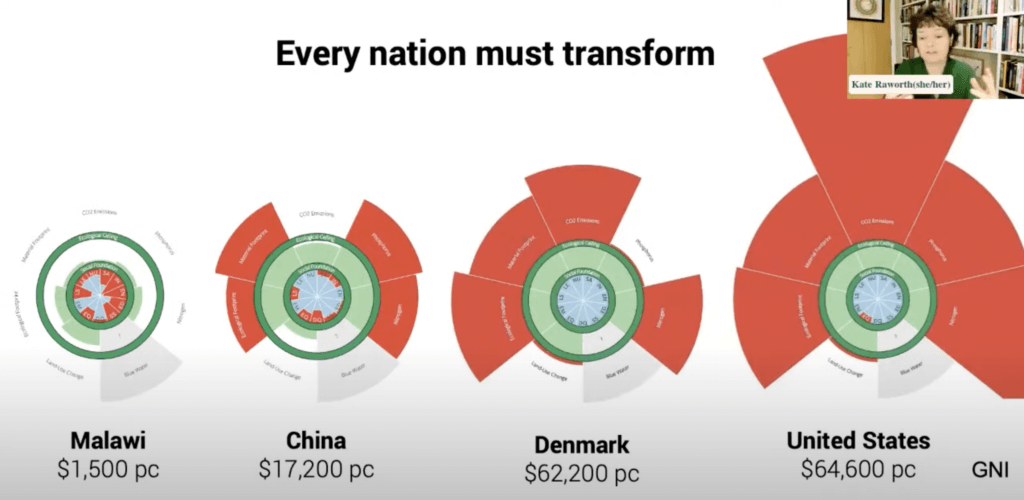
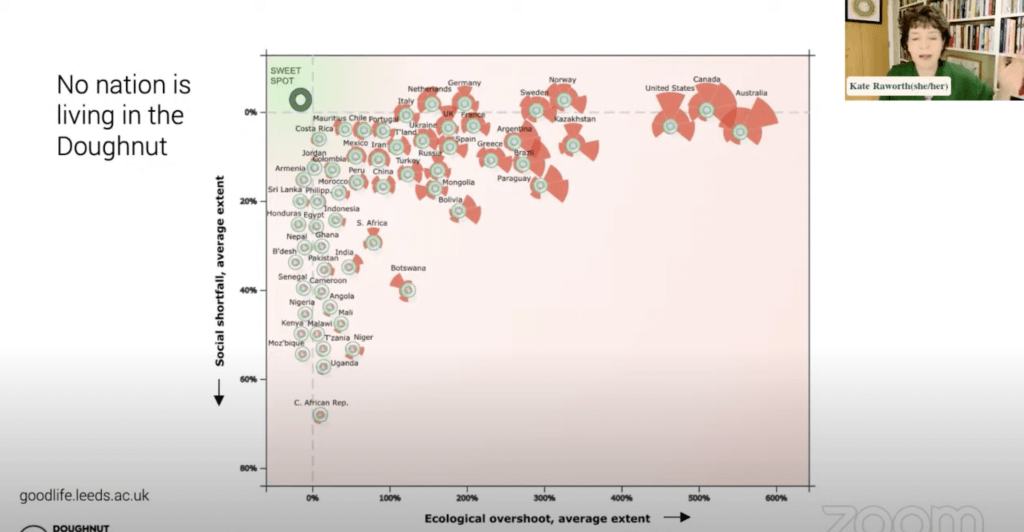
I’m proud to say that Amsterdam was the first city to call itself a Doughnut City and the Amsterdam Doughnut Coalition brings together over 100 local organizations, city government and local citizens initiatives, working hard to get the city within the sweet spot so that people can thrive in a thriving place within the planetary boundaries and social thresholds within the Doughnut. This is also where she started to turn the brilliant ideas of the Doughnut into action, which later became DEAL, The Doughnut Economic Action Lab, that now works with cities and regions all over the world from Cali, Colombia to Brussels, Belgium.
Kate Raworth’s work stands on the shoulders of great renegade economists of our time, many of whom have given Schumacher lectures in the past forty-two years. Kate embodies the spirit of E.F. Schumacher himself, showing that there are exceptions to the well-known saying that “anyone who thinks that you can have infinite growth on a finite planet is either a madman or an economist.” I remember during one of the events that Kate spoke at when her book Doughnut Economics first came out in 2017. Older, more traditional economists, stood up at the end of her talk, clearly irritated, and said, “most things that you say in your book have been said before.” I will always remember Kate’s brilliant rebuttal, “you are right, but obviously nobody was listening so I thought I would say them again.”
Kate is a brilliant communicator and has done so much important work communicating these crucial ideas to a broad audience and also tirelessly works to make economics education fit for the 21st century. With the beautiful visual simplicity of the Doughnut she has worked with artists and animators and has been able to connect to a broad audience and bring across these vital ideas openly with humor and clarity. Kate Raworth is a 21st century economist and obviously one of the sanest people around. Without further ado, I give you Kate Raworth and the 42nd E.F. Schumacher Lecture, Planetary Economics: New Tools for Local Transformation.