Arizona
Date Incorporated: 2006 Purpose: Maintaining the vibrancy and diversity of the local community by making homeownership more affordable in Patagonia. Documents: Bylaws and Articles of Incorporation can be found here. Background: A group of Patagonia residents founded Community Homes of Patagonia (CHOP) in 2006 in an effort to address the growing gap between local incomes and local cost of living. In particular, they intended to provide affordable home ownership opportunities to working families and individuals, so that the town’s teachers, nurses, and other essential workers would be able to reside in the town. The CLT is a grassroots community effort that quickly gained the support of the local town council. In 2014, they purchased their first property, and are working to construct affordable housing on this site. They were an entirely volunteer-based organization until they hired their first half-time staff member this year. Land holdings/Residents: In December 2014, CHOP purchased 0.6 acres of land known as Gopher Field, located at the corner of 3rd and Pennsylvania Avenues in Patagonia, for $27,500 from the Lenon Family, significantly below its appraised value of $115,000. The land, formerly home to the Patagonia Yankees Little League team coached by Father Titzler, was sold to support the creation of affordable housing, with the condition that a memorial for Father Titzler be placed on the site. CHOP plans to build six moderately-sized affordable homes on the site, comprising three single-family detached units and three attached units. Eligibility requirements for residents: completion of CHOP orientation, which includes a one-on-one conversation with a board member. Governance structure: Tripartite board elected by an open, voting membership . All board members are permanent residents of the area; ⅓ of seats reserved for low-income representatives Additional details: In addition to their homeownership program, CHOP runs a home repair program through which they assist low-income resident homeowners who cannot afford to make needed repairs that pose a risk to their health and safety. This program has helped 30 homeowners with needed repairs. While this program furthers CHOP’s goal of making homeownership more affordable, it also increases the visibility of the CLT in the Patagonia community. CHOP is the “sister CLT” of Pima County CLT.
Date Incorporated: 2001 Purpose: Strengthen communities and provide affordable housing. Land Holdings: Over 150 homes distributed throughout Maricopa County. Uses renewable 99-year lease structure Governance Notes: Tripartite board but no voting membership. Partners: Managed by the Newtown Community Development Corporation. Media: Grant money
Date Incorporated: 2010 Purpose: Affordable housing. Land Holdings: 94 single-family homes, 21 affordable rentals, uses CLT model to ensure affordability Governance Notes: Tripartite board but no voting membership. Partners: City of Tucson, Pima County, National Community Reinvestment Coalition, Wells Fargo Housing Foundation, Arizona Department of Housing, Community Food Bank of Southern Arizona, Vitalyst Health Foundation, Bank of America, Tucson Electric Power, Washington Federal, Pacific Premier Bank, Bank of the West, National Bank of Arizona, ARPA Additional Information: Pima County Community Land Trust (PCCLT) is a nonprofit, community based organization committed to developing permanently affordable housing; promoting community revitalization; and to providing programs and services that help Low to Moderate income people preserve, and sustain housing.
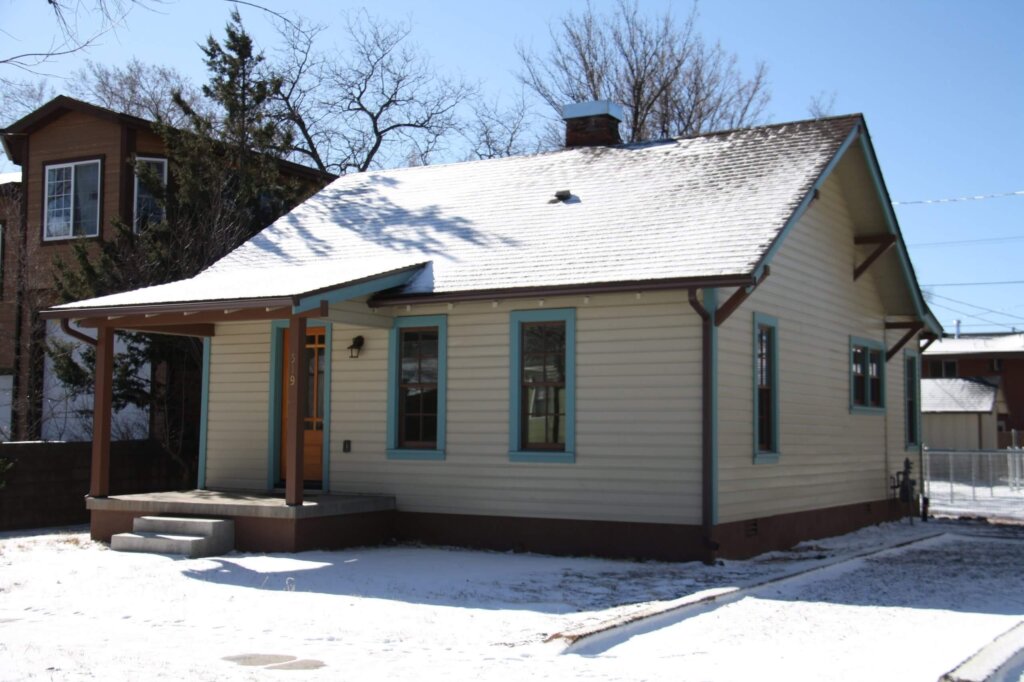
Date Incorporated: 2010 Purpose: Affordable housing and historic preservation. Land Holdings: Five properties, four of which are on adjoining lots and are historic homes. Uses renewable 99-year lease structure Governance Notes: Tripartite governing structure, open membership Partners: Arizona Community Foundation, Retired Senior Volunteer Program. Additional Information: TCLT acquired four fully historic cottages and renovated them. "The 4 Square Houses" were awarded Advanced Plus ratings by the Coconino County Sustainable Building Program. Media